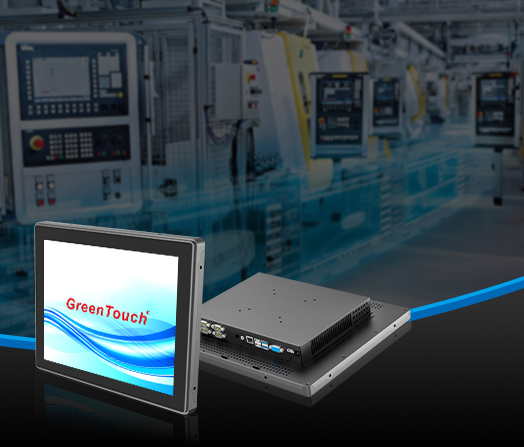
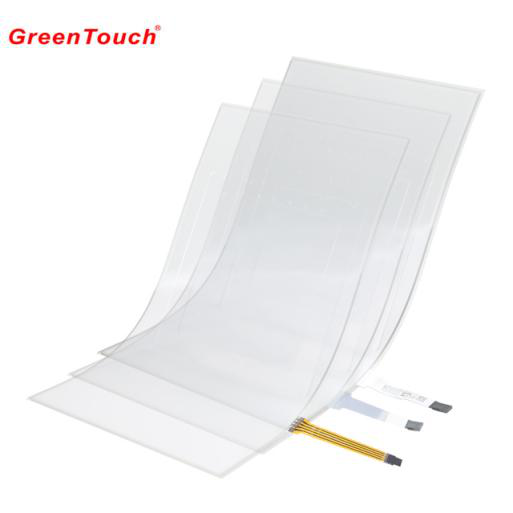
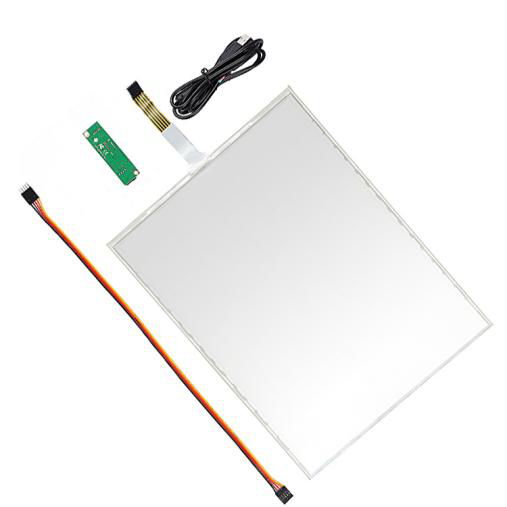
工作原理包括4线电阻式触摸屏 和5线电阻式触摸屏 是 主要实现对屏幕内容的操作和控制 通过压力传感原理。这个的屏体部分触摸屏 是 与显示器非常兼容的多层复合膜 表面。第一层是玻璃或有机玻璃。最底层,即 第二层为隔离层,第三层为 多组分树脂面层,表面还涂覆有 透明导电层,其上覆盖有硬化层, 外表面光滑且防刮的塑料层。的 聚酯表面的导电层和玻璃层传感器 表层由许多微小的间隔物隔开。电流通过 透过表层。当轻轻触摸表层时, 触摸底层,控制器读取对应的 当前并计算手指位置的距离。这触摸屏s uses two highly transparent conductive layers to form a 触摸屏, and the distance between the two layers is only 2.5 microns. When the finger touches the screen, the two conductive layers that are usually insulated from each other have a contact at the touch point. Because one of the conductive layers is connected to the 5V uniform voltage field in the Y-axis direction, the voltage of the detection layer changes from zero to If it is not zero, after the controller detects this connection, it performs A/D conversion, and compares the obtained voltage value with 5V to obtain the Y-axis coordinate of the touch point, and similarly obtains the X-axis coordinate. It is the most basic principle common to all resistive technology 触摸屏s. [3]

 English
 Español
 Portugues
 Pусский
 Français
 한국어
한국어 العربية